From@vault.pdc
To@seed.pdc
Amount1,250.00
AssetPDC
Memoinvoice 2207
Privacy Data Coin
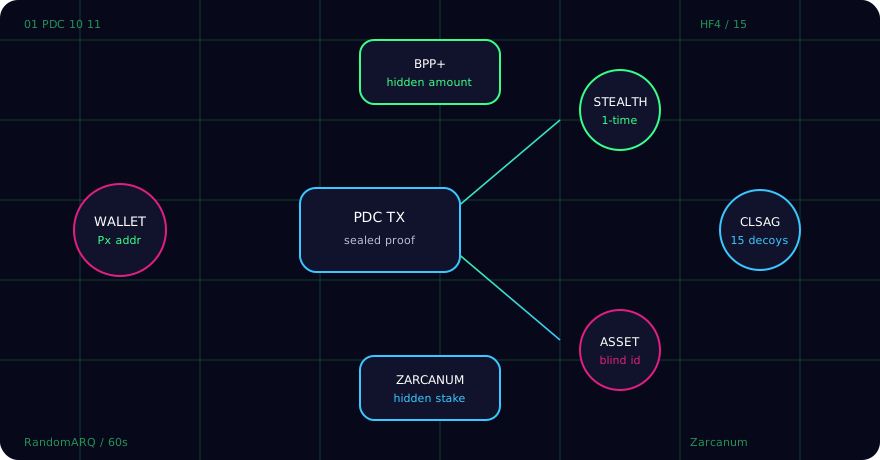
On PDC, a wallet transfer hides the sender, the receiver, the amount, and the asset type. Staking, aliases, and confidential assets use that same path. Privacy is how the protocol works, not a switch in the wallet.
System graphic
Mission
PDC is for sending coins, issuing a token, registering an alias, and staking without publishing a balance. There is no premine. Blocks are mined with RandomARQ and staked with Zarcanum. The desktop wallet, the daemon, and simplewallet ship in release v2.0.0.
Privacy stack
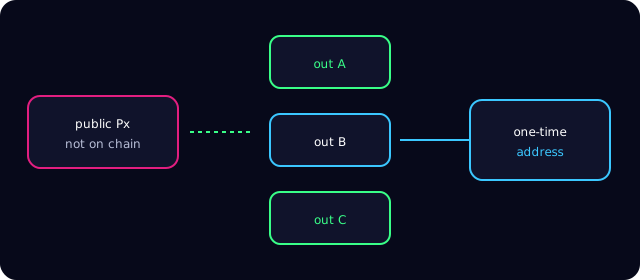
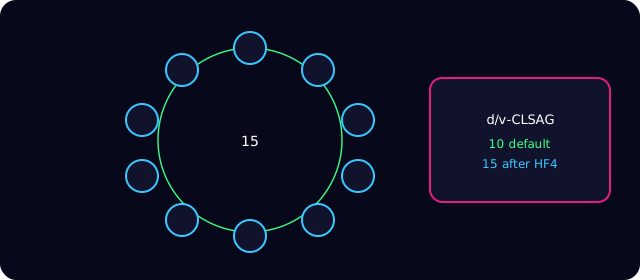
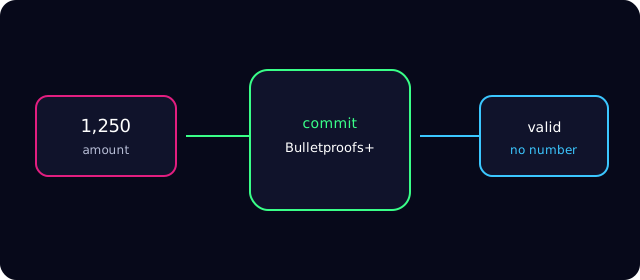
Pick a layer. The wallet slip shows what that layer removes from public view.
Why PDC
Sender, receiver, amount, and asset type stay hidden on a wallet transfer. There is no privacy mode to turn on.
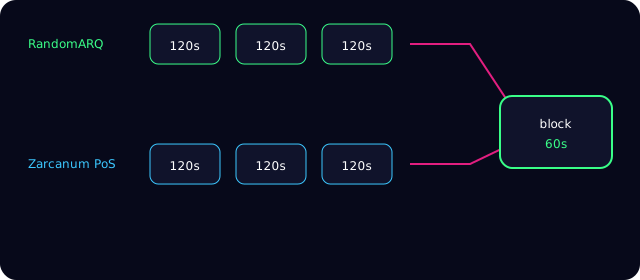
RandomARQ mining and Zarcanum staking secure PDC together. A rewrite has to beat both, not only one.
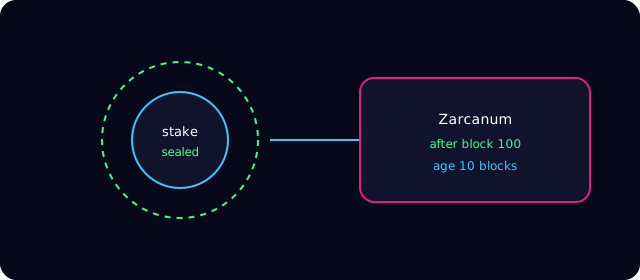
Anyone can mine, stake, or run a full node. There is no premine and no approval. A coinstake only has to age 10 blocks.
A wallet transfer does not name the parties or the amount, so there is no public field to censor by.
Coins do not carry a visible history. One PDC is not marked by where it has been.
Confidential assets, aliases, escrow, and integrated addresses are part of this chain. A normal address starts with Px.
Why default matters
On this network
These pieces are in the PrivacyDataCoin-Project/PDC tree and in release v2.0.0.
The Qt GUI from v2.0.0 sends, receives, and talks to the PDC core, including aliases and custom assets.
The daemon speaks P2P on port 19121 and RPC on 19211. The seed in the source is 169.58.142.131.
The command-line wallet is in the same release archives as the daemon.
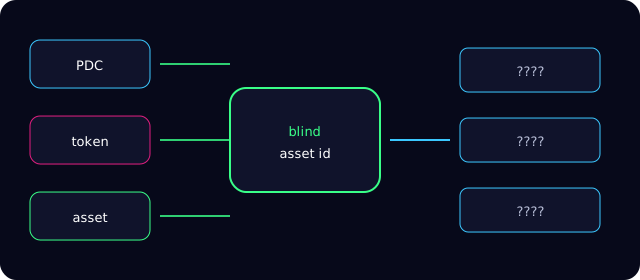
A token issued here is blinded on transfer. The wallet whitelist is api.privacydatacoin.com.
A short name can stand in for an address. The registration fee is burned.
The core can propose, release, cancel, or burn an escrow, and it keeps marketplace offers.
Project file
These values come from the pdc source and the v2.0.0 release. The full table is on the Network page.
| Name | Privacy Data Coin |
| Ticker | PDC |
| Release | v2.0.0, 17 September 2026. Not compatible with v1.0.0.7. |
| Consensus | RandomARQ proof of work and Zarcanum proof of stake |
| Block reward | 1 PDC, flat at every height |
| Block target | 60 seconds |
| Premine | 0 |
| P2P / RPC / stratum | 19121 / 19211 / 19777 |
| Genesis | df35cba557c857756f20612ce3c9d2aa315d0ae8fc2aaffe6c5c59d37e00b10a |
| Source | github.com/PrivacyDataCoin-Project/PDC |
| Domain | privacydatacoin.com |
| Block explorer | explorer.privacydatacoin.com |
| privacydatacoin@proton.me | |
| Telegram | t.me/privacydatacoin |
Short answers
The project organization hosts a one-page placeholder at privacydatacoin.com. This site is the replacement, written against the PrivacyDataCoin-Project/PDC sources.
No. get_base_block_reward returns 1 PDC at every height. There is no premine. About 1,440 blocks fit in a day when the 60-second target holds, so emission is about 525,600 PDC a year.
Release v2.0.0, published 17 September 2026. It resets the network: new genesis and a new P2P id. It does not speak to v1.0.0.7.
The chain, the daemon, simplewallet, and the Qt desktop GUI live at github.com/PrivacyDataCoin-Project/PDC on the master branch.
v2.0.0
GUI builds include the desktop wallet. CLI archives include the daemon and simplewallet.